
The government’s case against I2G focused on the allegation that it operated as a pyramid scheme, which they claimed was supported by an analysis of what they referred to as their “golden” internal data. However, the government manipulated this data by excluding $28 million in commission payments to I2G distributors and used data that belonged to a different company entirely. This manipulation and the resulting false representations constituted a complete fraud on the court.
The seven key spreadsheets presented as evidence of I2G being a pyramid scheme were claimed to be I2G data. These spreadsheets formed the foundation of Dr. Keep’s conclusions. However, Dr. Keep relied on false and manipulated data, which excluded $28 million in commission gains that were hidden from the jury in US Exhibit 101i, which four government witnesses claimed were I2G’s Total gains and losses. This was a knowing lie. Their own witness, Reynolds, the data provider, affirmed that the government “filtered out” significant commission payments to the very alleged victims! Additionally, these spreadsheets included two years of data from a completely separate company, XtG1.
The data in these spreadsheets extended two years beyond the period when I2G was operational and instead reflected the activities of Rick Maike’s subsequent company, which had no connection to I2G distributors. The government was fully aware of XtG1’s existence but misled the Court by claiming that the spreadsheet data, after the indictment’s timeline, represented I2G data. This was a deliberate deception aimed at the Court and jury..
The government presented twelve XTG1 product packages to the jury as I2G packages, which accounted for over $6 million in sales falsely attributed to I2G. Jerry Reynolds was asked to falsely represent these as I2G packages even though they were unrelated to I2G and belonged to the Hong Kong-based company XTG1. The government possessed emails between Reynolds and Angela Maike discussing the new company in 2015. Despite the government’s knowledge of Xtg1’s operations, XTG! packages were falsely identified as 12G-10054 through 12G-20054, presented through USA exhibit 101B.
This situation was critical because Jerry Reynolds was questioned about the specific sales totals of the three “top-selling” I2G packages, which were intended to impress the jury with prominent sales figures based on “recruiting” by I2G distributors. The government inflated the total sales figure by $6 million from XTG1 sales. This was highly prejudicial, especially when combined with the $28 million in commission gains that were excluded from 101i representations of I2G Total Gains and Losses.
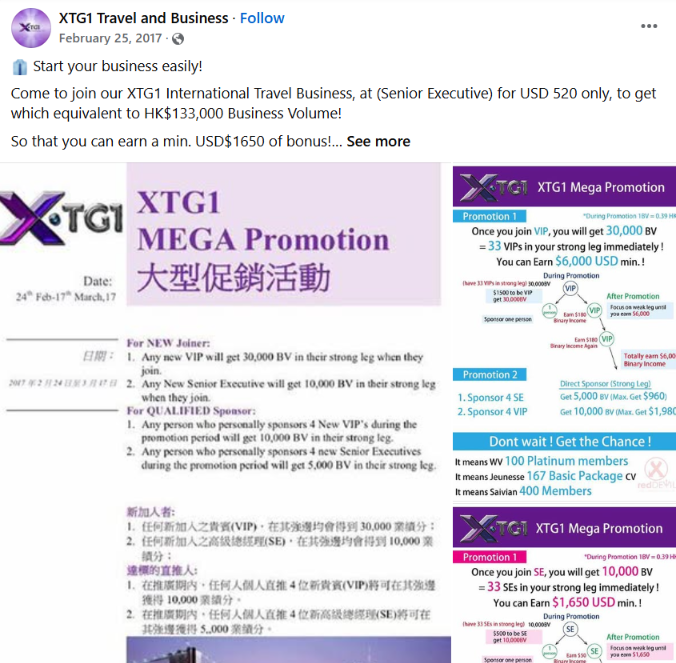
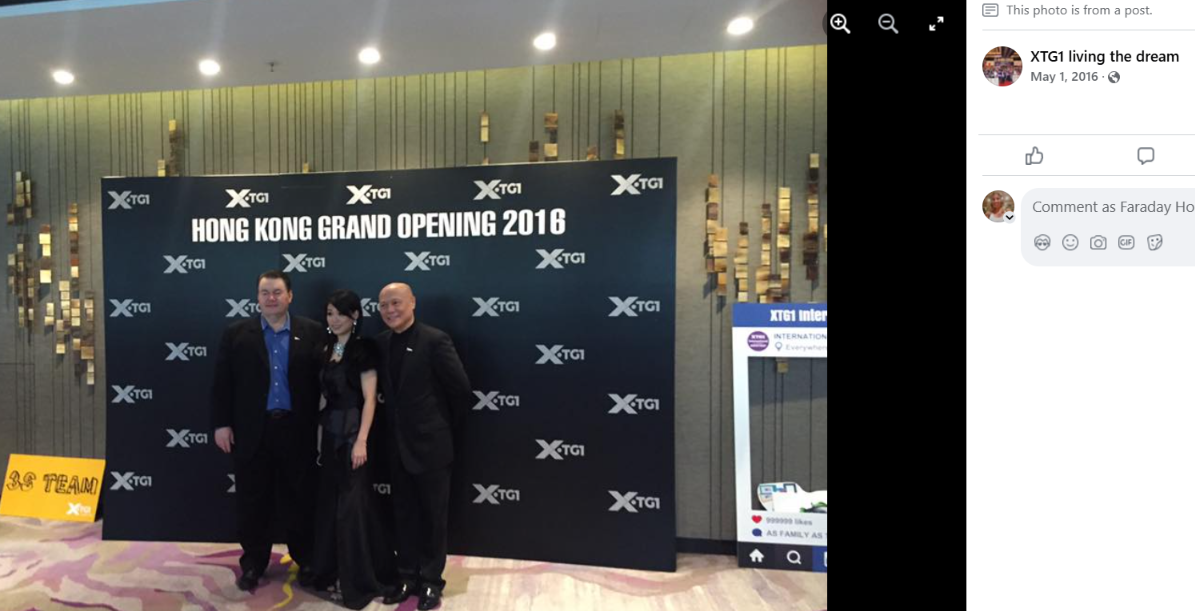
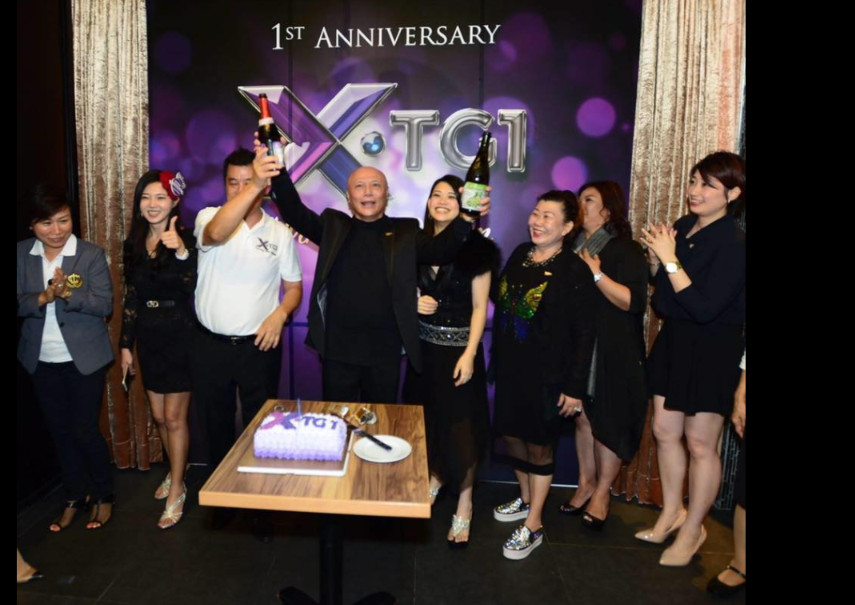
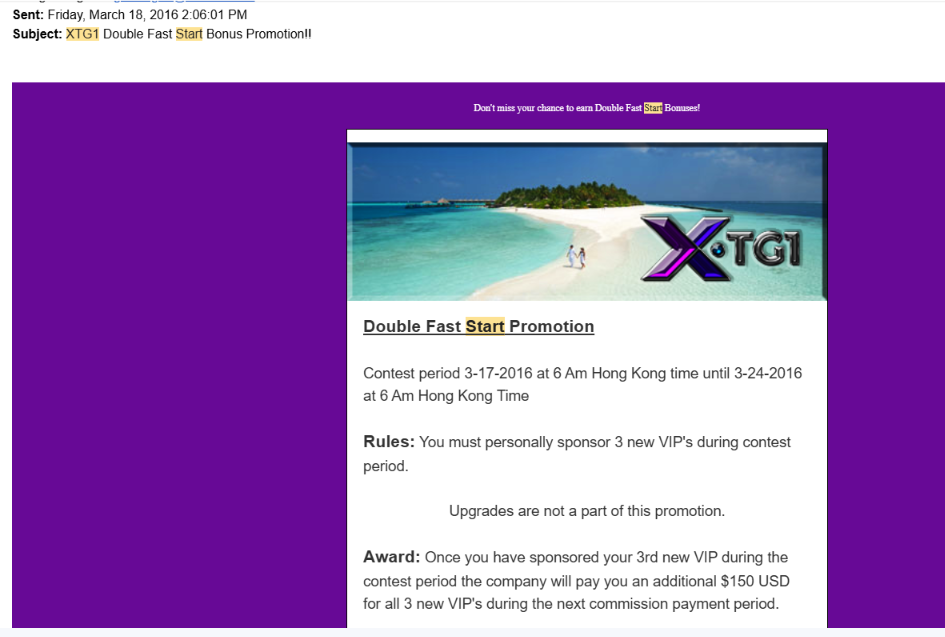
I have attached the XTG1 promotions, which include mentions of the VIP and Senior Executive Packages connected to XTG1 and not i2G. This is outrageous! Xtg1 pre-launched in the months preceding its official launch in September 2015. I2g had been closed for months. Nonetheless, all seven spreadsheets used by the government in the I2G trial continued until March 2017, two years after I2G closed.
What amount of false evidence layered upon false evidence is permitted in a federal trial? There has never been a case in history with such a high level of lies and misinformation.
The government presented these as i2G’s top product packages, even though the sales were made to Asian distributors through a completely separate company. The Xtg1 packages represented as I2G packages included:
VIP Monthly Subscription: $64,925.00 in sales.
VIP Travel Platform Software System: $4,222,364.00 in sales.
Executive Travel Platform and Software System: $1,130,125.25 in sales.
Senior Executive Travel Platform System: $320,905.50 in sales.
VIP Launch Promotion Pack: $596,110.00 in sales.
Executive Touch Monthly Subscriptions: $586,110.00 in sales.
Senior Executive Subscriptions: $418,125.00 in sales.
Executive to Senior Executive Upgrades: $105,595.00 in sales.
VIP Promotion Pack: $103,030.05 in sales.
VIP Monthly Subscriptions $64,925.00 in sales
Senior Executive to VIP Upgrade $17,810.50
You can also go to the product detail and open the distorted date fields to see that the sales were occurring two years after i2G was already closed!
The government asserted that the data distortions acknowledged by their agent, Sauber, during Maike’s sentencing hearing were minor. However, the estimated sales of Xtg1 alone total $6 million, which were incorrectly attributed to I2G. Additionally, the “filtered commissions” from 7240 amount to over $28 million, possibly nearing $32 million. These figures are staggering, as is the impact of the associated false representations.
The significance of the government knowingly misrepresenting data belonging to another company and exceeding its timeline is that it allowed the submission of irrelevant emails, which were unrelated to I2G, and which were solely related to XtG1. This included emails regarding foreign bank accounts in Hong Kong, which were sent long after I2G was closed. This misrepresentation suggested that certain emails and data were representative of an ongoing I2G conspiracy involving the defendants. For example, emails discussing potential banking opportunities in Asian countries were used to imply a hiding place for alleged missing funds (which were fully accounted for in document 7240). These bank accounts were instead linked to the XTg1 business, which was based in Hong Kong. The Xtg1 connection would have undermined their case and narrative, since Hosseinipour was never associated with Xtg1. The emails admitted were inadmissible.
The government introduced a demand letter, and part of Hosseinipour’s frustration came from discovering that Rick Maike had shifted his focus to a new company. Meanwhile, she and other distributors were still owed “earned commissions” from I2G. The government read the entire email aloud to the jury, except for the section that mentioned XTg1, which was deliberately excluded. Additionally, Hosseinipour, who lacked competent legal representation, did not raise any concerns about the post-indictment timelines, data, or emails.
In November 2015, a similar email expressing frustration from distributor Glen Logan was presented, which also conveyed anger over Maike’s launch of XTg1. Once again, the government read the entire email to criticize I2G’s operations, intentionally omitting references to XTg1. Clearly, the post-I2G emails should have been excluded. The fact that the data presented to the jury continued for another year and a half after these emails indicates the government’s awareness of XTg1 operations and amounts to a deliberate fraud on the court.